When Growth Stops Creating Value: The New Turnaround Strategy Playbook
Growth can look healthy while the economics underneath it deteriorate.
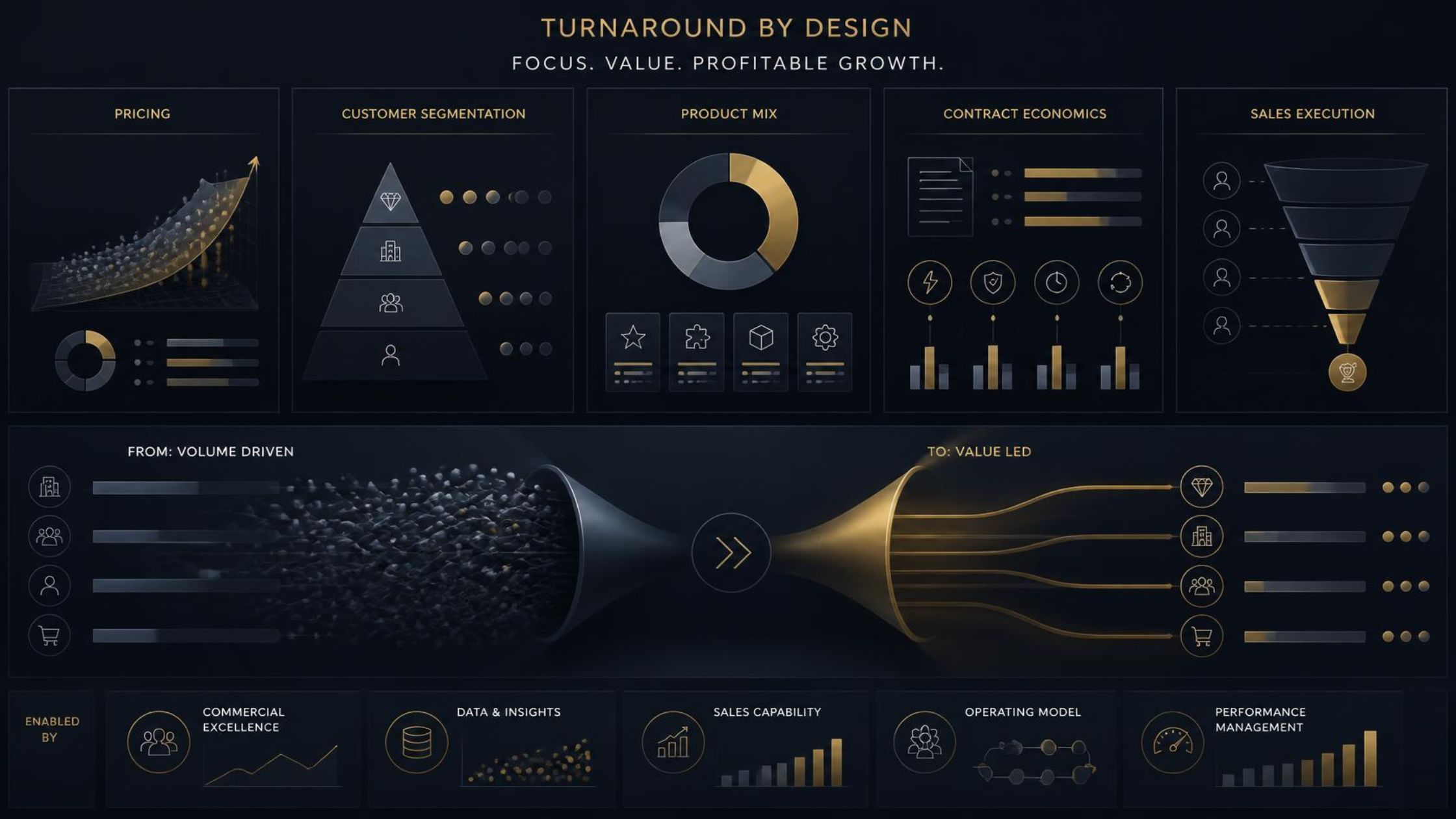
Revenue may rise while margins compress, receivables stretch, inventory accumulates, capital expenditure accelerates, customer acquisition becomes more expensive, service complexity expands and management attention fragments.
The company is growing. But it may not be creating value.
That distinction is becoming increasingly important for boards, CEOs, investors and transformation leaders.
Growth Is Not the Same as Value Creation
Revenue is an activity measure.
Value creation requires a relationship among:
Revenue quality;
Margin;
Cash conversion;
Capital intensity;
Returns;
Risk;
Strategic capability.
A business can add customers and revenue while simultaneously weakening its economic position.
For example:
growth may require excessive discounting;
low-quality customers may consume disproportionate service resources;
inventory may rise faster than sales;
receivables may lengthen;
capacity may be added ahead of demand;
technology investments may not translate into productivity;
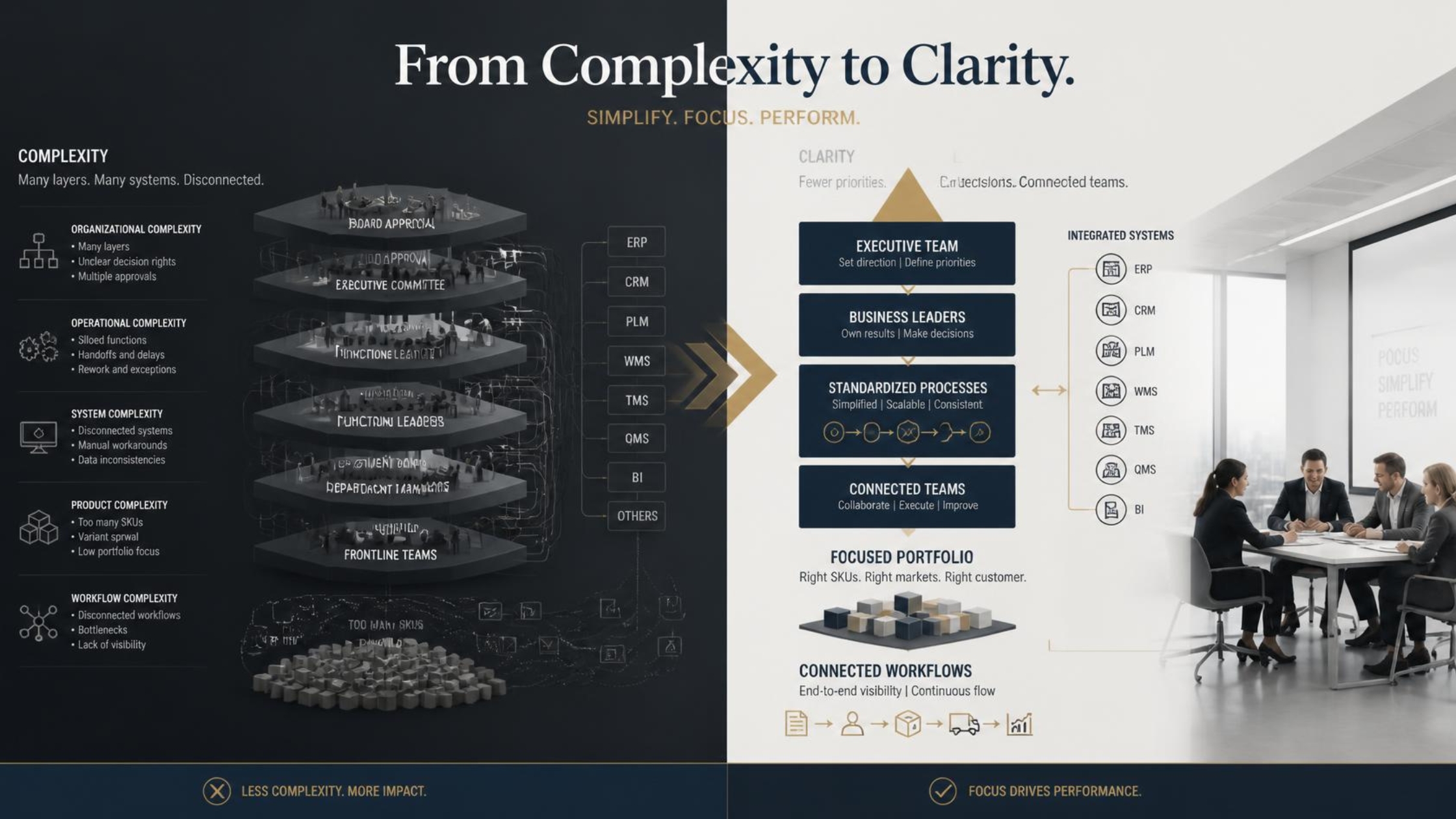
organizational layers may multiply;
capital may move toward lower-return businesses.
The result is a dangerous contradiction:
“More business activity, but less economic value.”
The Turnaround Begins Before Distress
Traditional turnaround thinking often begins when the situation becomes visibly severe.
Cash Flow becomes tight.
Lenders become concerned.
Suppliers tighten terms.
Employees become uncertain.
Management starts discussing restructuring.
But value leakage frequently begins much earlier.
A company may already be experiencing:
declining return on capital;
weakening free cash flow;
pricing leakage;
customer concentration;
working-capital deterioration;
product proliferation;
declining productivity;
excessive overhead;
low-return capital expenditure;
poor portfolio economics.
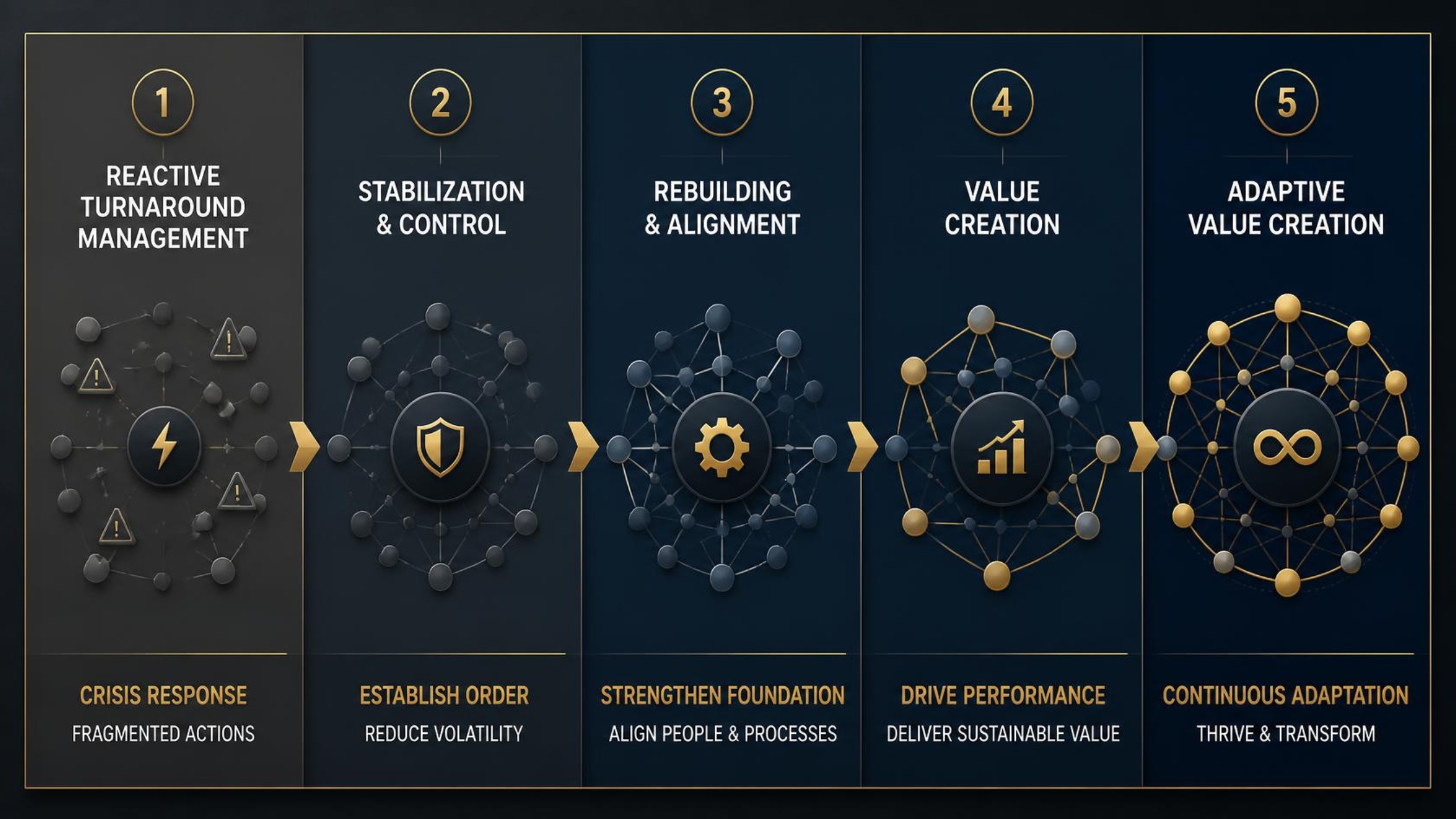
The opportunity is therefore to move turnaround thinking upstream.