From Efficiency to Resilience: Why Global Supply Chains Are Being Redesigned
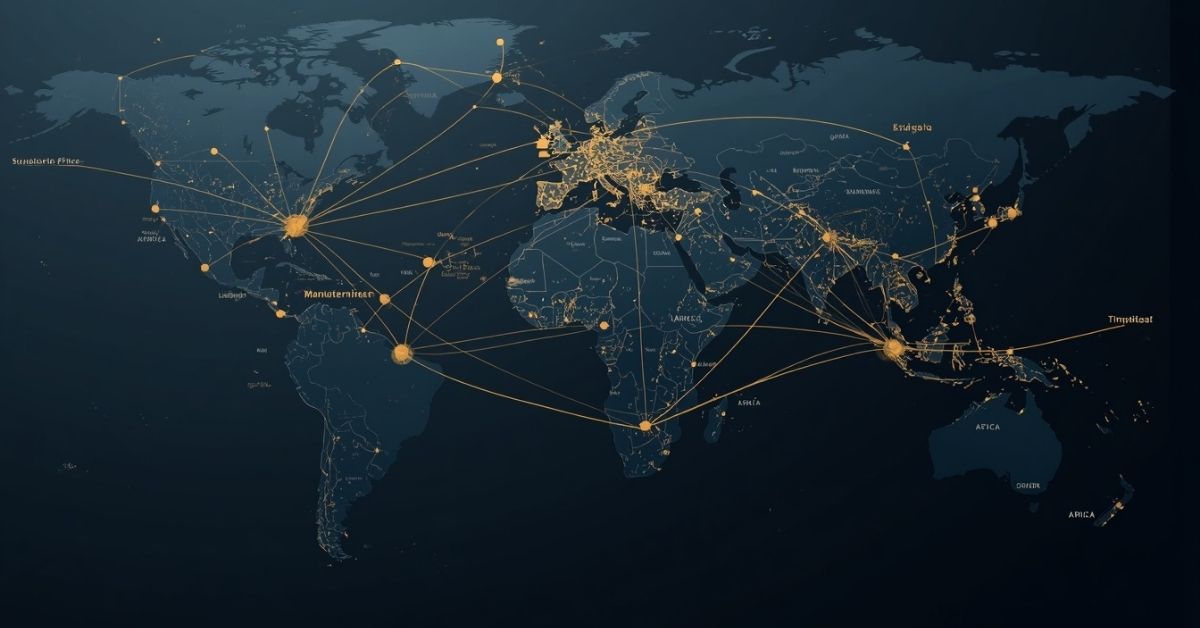
Global supply chains are not disappearing. They are being redesigned to balance cost efficiency with resilience, visibility, optionality and strategic control.
Global supply chains are moving beyond a pure cost-and-efficiency logic. Geopolitical tensions, trade policy, transport disruption, concentration risk and changing customer expectations are pushing companies to redesign networks for resilience without abandoning the benefits of global trade.
For decades, supply-chain design rewarded scale, specialization, low unit cost, high utilization and just-in-time coordination. Those principles remain economically important, but repeated disruptions have exposed the cost of hidden concentration, single-source dependencies, fragile logistics corridors and limited visibility beyond tier-one suppliers.
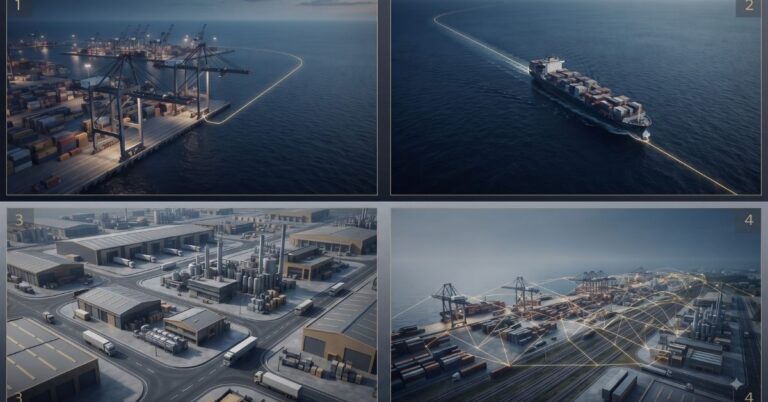
The emerging model is not simply 'localizing everything.' The strategic challenge is to preserve the benefits of global networks while adding diversification, optionality, visibility, scenario capability, regional capacity where justified, and faster recovery mechanisms.
For decades, global supply chains were designed around a powerful principle: make the network as efficient as possible under expected conditions. Source from the lowest-cost supplier. Concentrate production where scale and specialization are strongest. Reduce inventory. Increase asset utilization. Coordinate demand, production and logistics with increasingly precise planning systems.
That model created enormous economic value. Global production networks lowered costs, expanded access to capabilities and connected markets at scale. Global trade remains deeply interconnected: DHL's 2026 Global Connectedness Report, based on more than nine million data points, says global interconnectedness has remained resilient despite geopolitical tensions.
But the environment around those networks has changed. Geopolitical tensions, trade-policy uncertainty, transport chokepoints, climate exposure, cyber risk, regulatory fragmentation and repeated logistics disruptions have made one assumption increasingly dangerous: that the future will behave sufficiently like the past for the most efficient network to remain the most valuable network.
The strategic response is not necessarily to abandon globalization or move every factory closer to every customer. It is network redesign: preserve efficiency where it remains economically rational while building visibility, diversification, optionality and reconfiguration capability.
“But, what if the goal of supply-chain resilience is not to eliminate global interdependence, but to redesign it so that disruption no longer becomes a single point of failure?”
Efficiency Worked—Until the Environment Changed
Efficiency logic
Value created
Hidden exposure
Concentrated sourcing
Volume leverage and lower unit cost
Supplier/country concentration
Just-in-time inventory
Lower working capital
Less time to absorb disruption
Global specialization
Scale and expertise
Longer dependency chains
Centralized production
High utilization
Regional disruption exposure
Lean logistics
Lower transport cost
Less route flexibility
Tight integration
Quality and coordination
Potential lock-in
The problem is not that these practices are inherently wrong. The problem is that they can become optimized for a stable probability distribution that no longer describes the operating environment.
What Is Being Redesigned?
Layer
Traditional question
Emerging question
Supplier base
Who is cheapest?
Where are critical dependencies and credible alternatives?
Manufacturing
Where is unit economics best?
Where should capacity sit for economics, access and risk?
Inventory
How little can we hold?
Where does inventory buy economically valuable response time?
Logistics
What is the cheapest route?
Which alternatives preserve service under disruption?
Data
Can we plan?
Can we see and sense early enough to act?
Governance
Who manages risk?
Who can trigger reconfiguration?
Capital
What minimizes cost?
What portfolio of cost, continuity and optionality creates value?
This is not a statistically validated equation. Its purpose is to force a broader executive conversation. Efficiency remains essential. Resilience adds shock absorption. Optionality creates choices. Visibility reduces uncertainty. Complexity is the cost of carrying too many nodes, suppliers, systems, standards or decision pathways.
Resilience Is Not the Same as Localization
The OECD's 2025 Supply Chain Resilience Review argues that resilience is not about eliminating risk. It finds that blanket relocalisation can carry substantial economic costs without consistently improving resilience. Its modelling indicates that relocalising supply chains could reduce global trade by more than 18% and global real GDP by more than 5%, while GDP volatility increased in more than half of the economies modelled.
The strategic lesson is not 'stay global at all costs.' It is 'redesign the network intelligently.'
Strategy
Potential benefit
Potential risk
Localization
Shorter distance / domestic control
Higher cost or new concentration
Regionalisation
Reduced lead time / flexibility
Capacity limitations
Multi-country sourcing
Lower single-country dependence
More coordination
Dual sourcing
Alternative supply
Qualification cost
Strategic inventory
Time buffer
Working capital / obsolescence
Flexible manufacturing
Reconfiguration
Investment
Route diversification
Transport continuity
Freight premium
Five Forces Redesigning Global Networks
1. Geopolitical and Trade-Policy Risk
The WTO's 2026 work describes a trading system under pressure from geopolitical tensions, growing government intervention, global value-chain complexity and digitalization. Country risk can no longer be assessed only through wages, tariffs and transport costs; export controls, sanctions exposure, policy stability and critical-input access can alter network economics.
2. Transport Chokepoints
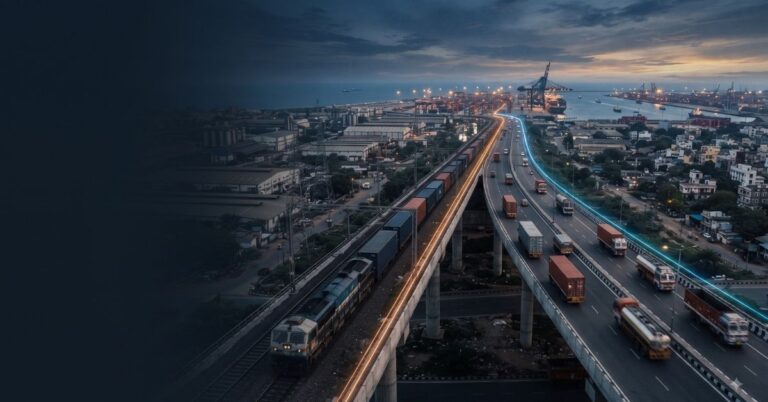
UNCTAD notes that more than 80% of the volume of international goods trade is carried by sea. Its 2025 maritime review highlighted fragile growth, rising costs and route disruption; rerouting around the Cape of Good Hope pushed ton-miles to a record increase in 2024.
Here the key question becomes: what is the cost and service impact if the preferred lane becomes unavailable?
3. Concentration Risk
Concentration can occur at supplier, country, plant, port, material, technology or sub-tier levels. OECD evidence shows a significant rise in global import concentration in the early 2020s compared with the late 1990s.
4. Climate and Physical Disruption
Climate and extreme-weather exposure add uncertainty to nodes and corridors. The practical response is not to predict every event, but to identify low-substitutability, high-consequence dependencies and design credible alternatives.
5. Digitalization and Decision Speed
Digital tools can improve visibility, traceability, scenario planning and exception management. But technology does not create resilience automatically. Data quality, integration, decision rights and operating discipline determine whether information becomes action.
The Indo Shinka Advisory Supply Chain Resilience Architecture
Layer
Executive question
Design response
1. Visibility
Where are critical dependencies?
Map tiers, nodes, lanes, materials and constraints.
2. Diversification
Where is concentration unacceptable?
Qualify alternate suppliers and geographies.
3. Optionality
What can we switch?
Create credible alternative routes, capacity and designs.
Build scenarios, modularity and response mechanisms.
7. Governance
Who decides under pressure?
Predefine thresholds, ownership and escalation.
Note: This is an Indo Shinka Advisory analytical framework, not a statistically validated model.
India Lens
India's role in global supply-chain redesign should not be reduced to a 'China+1' narrative. A stronger strategic question asks which value-chain activities India can perform competitively, which markets it can serve, which inputs remain globally sourced, and which logistics, supplier-ecosystem and regulatory capabilities determine scalability.
The OECD's 2025 analysis explicitly identifies India among diversification opportunities in pharmaceuticals and other supply-chain contexts.
For Indian enterprises, resilience works in reverse too: the objective is not only to become a destination for diversified sourcing, but to build companies that can withstand global shocks through diversified suppliers, stronger logistics, better data and flexible operating models.
What Leaders Should Measure
Dimension
Diagnostic
Why it matters
Concentration
Critical spend/volume dependent on top supplier/country
Single-point exposure
Time to recover
Estimated recovery after critical failure
Customer/service impact
Time to switch
Time to activate qualified alternative
Real optionality
Visibility
Critical network mapped beyond tier one
Hidden dependencies
Route flexibility
Critical flows with viable alternatives
Chokepoint resilience
Strategic buffers
Coverage for critical inputs
Response time
Capacity flexibility
Reconfigurable critical capacity
Adaptability
Decision speed
Signal-to-approved-action time
Governance
Resilience economics
Loss avoided per resilience investment
Capital allocation
Supply Chain Resilience Maturity
Level
Maturity
Characteristics
1
Reactive
Disruption managed after impact
2
Aware
Major risks identified and mapped
3
Diversified
Critical dependencies have credible alternatives
4
Adaptive
Scenario planning and cross-functional response
5
Resilient by Design
Network, capital and governance continuously balance efficiency and resilience
Note: This maturity model is an Indo Shinka Advisory analytical framework and is not statistically validated.
When Resilience Becomes Competitive Advantage
Resilience is often discussed as insurance. That is incomplete. A resilient network can create positive commercial value when it enables a company to accept orders others cannot, maintain service during shortages, recover faster, or switch inputs without destroying customer economics.
The strategic opportunity is to identify where resilience creates revenue or strategic-option value—not merely where it prevents loss.
The Complexity Trap
There is a danger on the other side: building a network so complicated that the cure becomes a new source of fragility. Every additional supplier, plant, route or system creates management cost. The answer is not maximum redundancy. It is economically justified optionality.
So the Key Question to Ask here is: **Which alternatives are valuable enough to maintain before a crisis rather than discover during one?**
SmartFive™ Connection
Stage
Application
Analyze
Map dependencies, concentration, chokepoints, critical flows and disruption economics.
Redesign
Reconfigure sourcing, footprint, inventory, logistics, data and governance.
Transform
Build capabilities, technology, roles and routines for the redesigned network.
Scale
Replicate resilient practices without multiplying unnecessary complexity.
Mentor
Create continuous leadership discipline for sensing, scenario testing and redesign.
1. Which three dependencies could stop our most important revenue streams tomorrow?
2. Where are we paying for efficiency by accepting concentration risk we have not priced?
3. Which alternative suppliers, routes or capacities are genuinely qualified?
4. How quickly can we reconfigure after a major disruption?
5. Where should strategic buffers sit, and what is the return on the response time they buy?
6. Which supply-chain decisions require board-level visibility because they are strategic or geopolitical?
7. Are we redesigning the supply chain once—or building the capability to redesign it continuously?
Conclusion
The era of supply-chain optimization is not over. It is being redefined. Cost, working capital, utilization and specialization still matter. But networks must now be evaluated against geopolitical volatility, trade restrictions, transport disruption, concentration risk, climate exposure and changing customer expectations.
The most resilient supply chain is not necessarily the most localized, diversified or heavily buffered. It is the one whose architecture reflects the economic value of continuity and whose organization can reconfigure the network when assumptions change.
But, the strategic question is no longer simply:
**How efficiently can we move goods?**
Today it actually is:
**How much value can our network continue to deliver when the world changes?**
“Supply-chain resilience is a business transformation issue because the network is inseparable from the operating model. Supplier choices affect capital. Manufacturing footprints affect market strategy. Logistics architecture affects service. Data architecture affects decision speed. Governance determines whether the organization can act before disruption becomes a crisis.”
Indo Shinka Advisory
Strategic Business Transformation & Turnaround Experts