India Africa: From Trade Relationship to Strategic Supply Chain Partnership
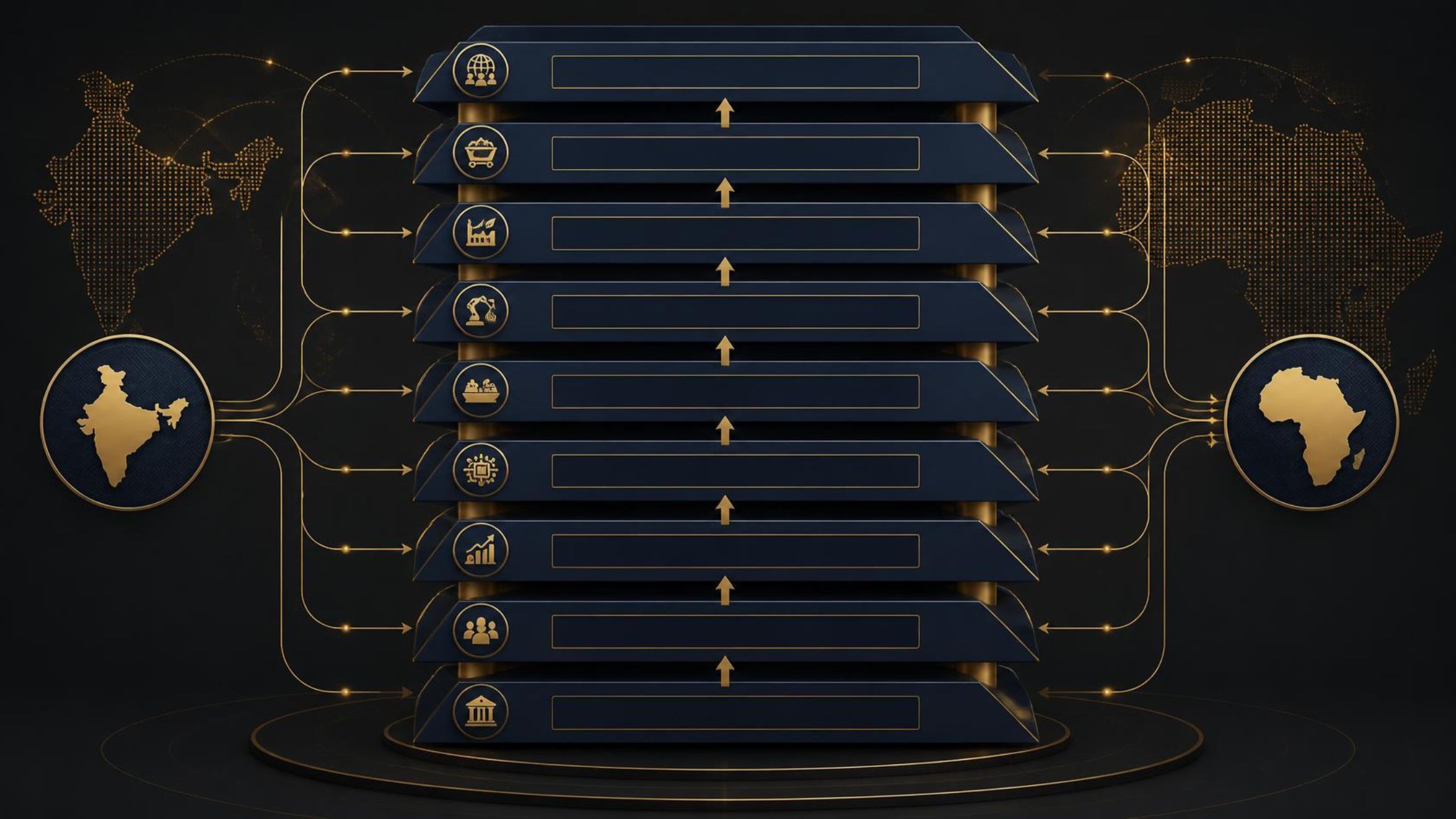
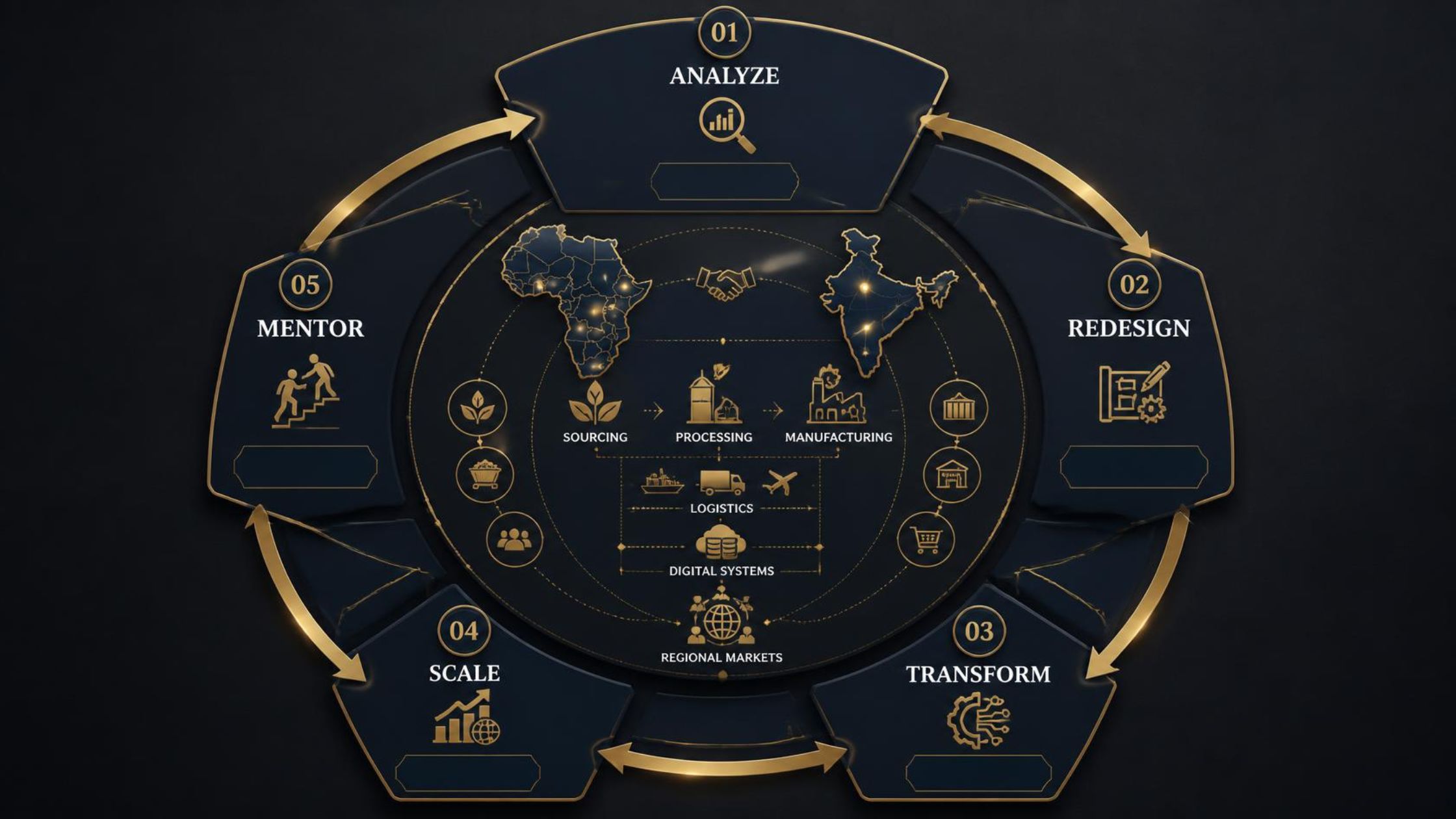
India–Africa engagement can deepen from trade into connected value chains spanning sourcing, processing, manufacturing, logistics, digital systems, finance, skills and market access.
India and Africa do not need a new economic relationship. They already have one. The more consequential question is whether the existing relationship can become structurally deeper.
Trade flows can be measured. Supply-chain partnerships are harder to see because they sit across sourcing, processing, manufacturing, transport, finance, technology, skills, standards and market access. A company may import a commodity from Africa, manufacture in India and sell into an African market. Another may invest in local processing. A third may build a regional distribution network. These are different forms of engagement.
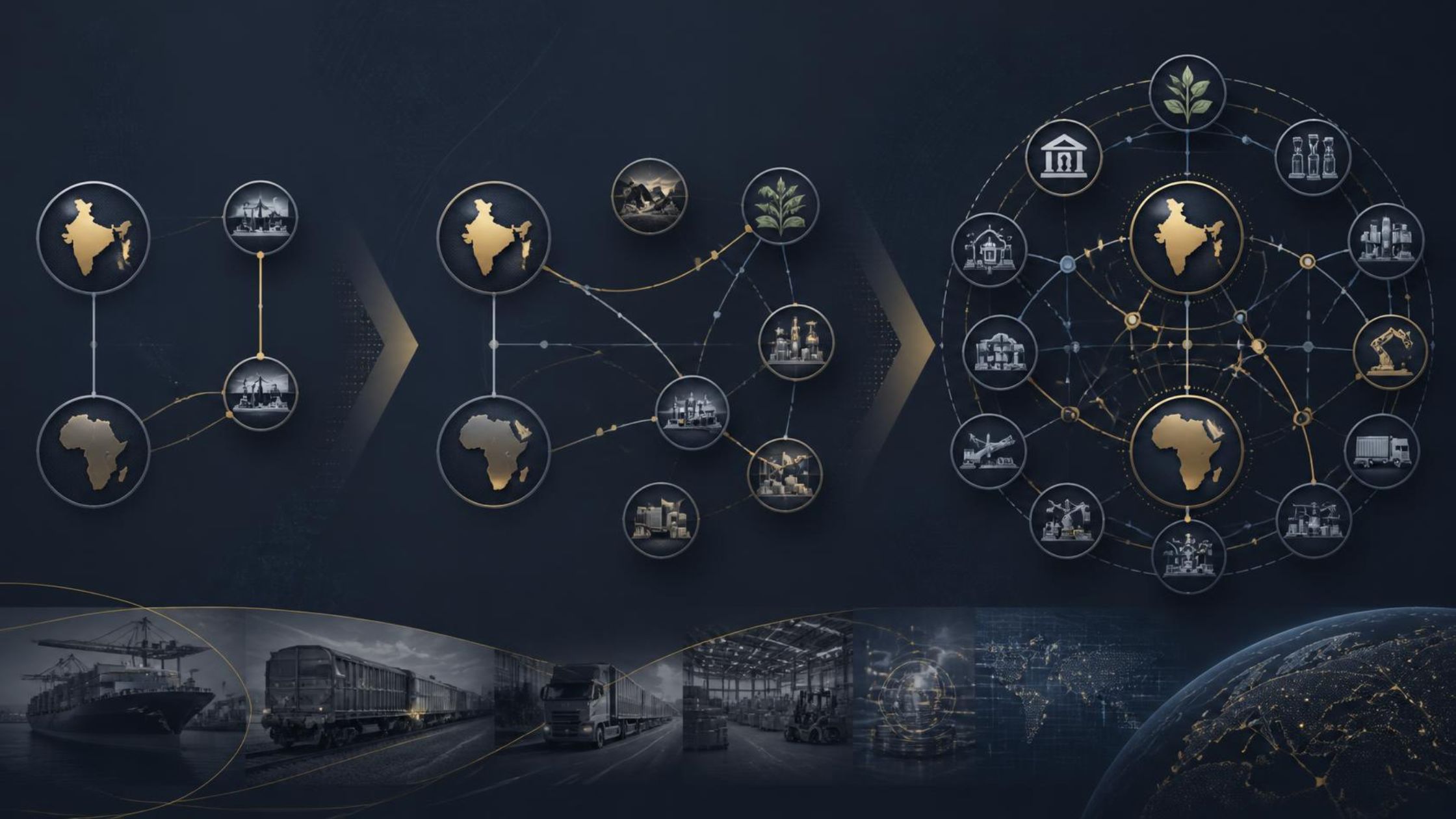
The strategic shift is therefore from asking how much India trades with Africa to asking how India and African economies can participate in connected value creation.
But, What if the next phase of India–Africa economic engagement is less about moving more goods between markets and more about designing connected value chains across them?
The relationship is already commercially meaningful
India’s Department of Commerce reports US$70.49 billion in total trade with Sub-Saharan Africa in 2024–25. Long-term export growth is also visible in West Africa and the SACU region. These figures establish a substantial commercial base, but they do not by themselves prove integrated supply chains.
A large trade number can coexist with fragmented logistics, limited local value addition, supplier concentration and dependence on particular commodities or routes.
From trade flows to value-chain design
A trade relationship asks: What crosses the border? A supply-chain partnership asks: Where is it sourced, processed, financed, manufactured, transported, stored and sold? Which standards apply? How is demand forecast? Which capabilities remain local? How does the network respond when prices, regulations, weather, geopolitics or transport conditions change?
That distinction changes investment logic. If the relationship is viewed through trade, the unit of analysis is often the product and transaction. If it is viewed through supply chains, the unit becomes the network.
Africa is not one operating market
African countries differ materially in market size, industrial capability, infrastructure, regulation, currency, skills and regional integration. A credible India–Africa supply-chain strategy therefore needs a portfolio and corridor perspective rather than a continent-wide generic playbook.
One geography may be a sourcing location; another a processing or manufacturing hub; another a gateway to a regional market. The strategic task is to understand the network.
Four pathways from trade to partnership
Pathway
Illustrative logic
Key test
Source
Africa supplies strategic inputs to Indian or regional production.
Reliability, compliance and economics.
Process
More value is added closer to the source.
Power, skills, technology, finance and customers.
Co-produce
Indian and African firms share production/service capabilities.
Commercially viable division of capabilities.
Serve regional markets
A network serves multiple African markets.
Customs, standards, payments and logistics support scale.
Critical minerals: from extraction to value chains
Critical minerals illustrate why the supply-chain lens matters. Availability is only the first question. The deeper questions concern responsible processing, infrastructure, financing, technology, skills and downstream demand.
A 2026 joint MDB statement explicitly connects critical-mineral value chains with integrated infrastructure and corridors linking mining to processing hubs and wider markets.
For Indian firms, the strategic implication is not that every chain should be vertically integrated. It is to identify where a defensible position can be created in sourcing, processing, technology, logistics or downstream manufacturing.
Pharmaceuticals, healthcare and life sciences
Healthcare supply chains can span APIs and inputs, formulations, local manufacturing, distribution, cold-chain capability, digital systems, training and quality management. The correct design depends on the product and regulatory environment.
Agriculture and food value chains
Agricultural trade can move beyond commodity movement toward processing, packaging, cold chain, storage, quality systems and regional distribution. The value lies in reducing avoidable losses, increasing shelf life, creating local value and connecting producers to more predictable demand.
Manufacturing and industrial ecosystems
The African Development Bank’s 2026 industrialization work highlights infrastructure, skills, finance, technology and weak production–processing linkages as constraints, while positioning regional value chains as part of industrial development.
This creates potential partnership space for Indian firms with capabilities in engineering, pharmaceuticals, automotive components, agricultural processing, digital services, financial technology and industrial ecosystems. But capability transfer is not automatically valuable; it must fit local demand and economics.
Logistics is the hidden architecture
Ports, inland transport, border processes, warehouses, cold chains, rail corridors and last-mile distribution determine whether a production network can operate at acceptable cost and reliability. The World Bank’s 2026 integration work treats transport and logistics as practical determinants of regional market function.
Digital interoperability matters
A supply chain can be physically connected and still operationally fragmented. Order visibility, shipment status, documentation, payment information and compliance records may remain disconnected. Cross-border supply-chain strategy therefore needs a digital coordination layer.
Finance is part of the supply chain
Working capital can determine whether a supply chain works. Lead times, inventory buffers, currency movements and payment friction can consume the economic benefit of low-cost sourcing. Partnership design should therefore include trade finance, investment capital, risk-sharing and ownership of inventory and receivables.
The strategic shift: from bilateral trade to network participation
A bilateral trade relationship can be commercially valuable while remaining structurally shallow. A supply-chain partnership becomes deeper when firms coordinate multiple activities and create mutually reinforcing capabilities.
The India–Africa relationship does not need to be reinvented as a slogan. It needs to be examined as an operating system.
Trade remains the foundation. The next layer of value may come from connecting sourcing, processing, manufacturing, logistics, finance, digital coordination and regional market access into economically viable networks.
Africa’s integration agenda is moving toward more connected markets, while India continues to deepen its engagement through trade, investment, business and institutional channels. The opportunity for companies is to identify where those systems intersect and where a partnership can create value beyond the transaction.
Infrastructure creates possibility. Trade creates connection. Supply-chain design determines whether the connection becomes a durable strategic advantage.
Indo Shinka Advisory
Strategic Business Transformation & Turnaround Experts